Borrow the Headset, Skip the Buy-In: How American Libraries Became VR's Front Door
In 2026, the most sensible answer to "how do I try VR without dropping six hundred bucks on a maybe" is a piece of laminated cardstock with your name on it and a due date stamped on the sleeve.
Public libraries across the country have spent the past several years quietly building one of the most effective on-ramps into immersive tech that exists in America. Not a demo booth at a convention. Not a fifteen-minute mall kiosk. A borrowing system — free at the point of use, staffed by people who will actually sit with you while you figure out which strap goes where.
That matters more than it sounds. As headset prices hold steady and accessory costs keep creeping up, the gap between "curious" and "customer" has gotten wider. Libraries are the thing filling it.
Two models, one goal
Most public VR programs land in one of two buckets.
The first is the in-building lab: a few headsets, a reserved room, a calendar you book a slot on. Sessions typically run 30 to 60 minutes, staff-supervised, often with a curated list of experiences that have been vetted for comfort and content. This is where most first-timers start, and it's where the real teaching happens.
The second is the take-home kit: a headset in a hard case, controllers, a charging cable, disposable face covers, sanitizing wipes, and a printed card walking you through setup. Age policies skew stricter here — 13-plus is common, 18-plus isn't unusual for some systems — and most libraries require a card in good standing plus a signed agreement that covers replacement costs if the thing comes back in pieces.
Neither model makes money. That's not the point. The point is that the risk sits with the institution instead of the patron.
The hygiene operation is the whole operation
Ask a circulation librarian what surprised them most about running a VR program and you rarely hear about hardware failures. You hear about the cleaning schedule.
Face cushions absorb sweat. Foam degrades. Lens cloths disappear. The libraries that have made this work treat a headset less like a book and more like a shared piece of gym equipment — which means disposable hygiene covers, UV sanitizing cabinets in some systems, a documented wipe-down between every session, and honest signage telling patrons exactly what gets cleaned and when.
A few things librarians told us consistently shape the protocol:
- Time buffers matter. Booking a session back-to-back with no cleanup window is how programs fall apart.
- Cushion rotation beats scrubbing. Having three or four spare face cushions per headset is cheaper than replacing headsets early.
- Patrons notice. Programs that publish their cleaning routine get fewer complaints than programs that just say "it's clean."
Nobody loves this part of the job. But it's the difference between a program that survives its first year and one that quietly stops getting booked.
Onboarding is the actual product
The hardware is the least interesting variable. What separates a good library VR program from a bad one is roughly fifteen minutes of human attention.
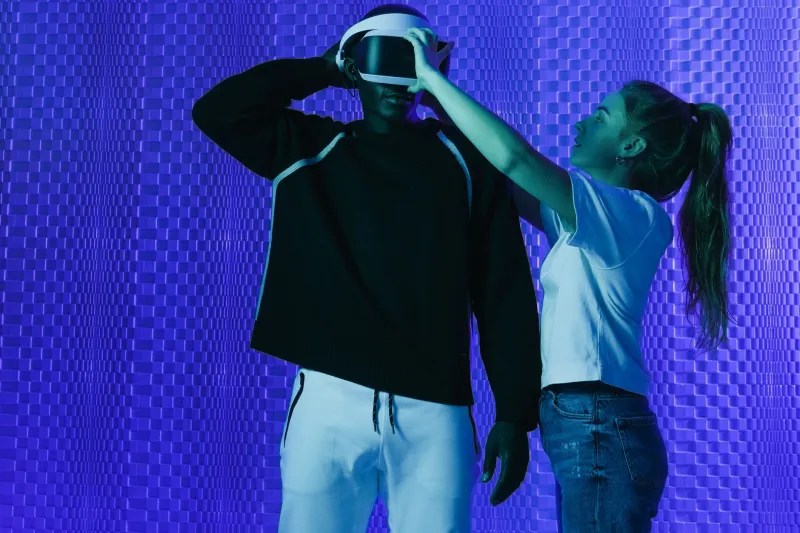
Staff at established programs follow a loose script that goes something like this: adjust the headset for the patron's eyes before they ever put it on, start seated, start with something stationary and short, and — critically — tell them out loud that feeling weird is normal and that they should say something the second they do.
That last part is doing more work than any piece of technology in the building. Motion sickness in VR isn't a personality flaw, and first-timers who don't know that will grit their teeth through a bad session and never come back. Librarians have learned to name it before it happens.
The other lesson: don't lead with the flashiest thing in the library's catalog. The rollercoaster is a terrible first experience for a lot of adults. A short, seated, static scene — a museum walkthrough, a nature piece, a 360 documentary — sets a far better baseline, and it gives staff something to build from on the second visit.
The budget math nobody enjoys
These programs aren't free to run. A modest setup — say four headsets, cases, cleaning supplies, a storage cabinet, and a lockable charging station — is a real line item. Add staff hours for supervision and setup help, plus an ongoing replacement fund, and you're looking at a recurring cost that has to be justified every budget cycle.
Most of the money comes from grants, state library funds, and one-time technology allocations rather than the general materials budget, which means programs live and die on renewals. Breakage is the number that scares administrators most, and the libraries that plan for it — charging a clearly stated replacement fee, keeping a spare controller on hand — stay in business longer than the ones that hope for the best.
Why this is the on-ramp that counts
A library card gets VR in front of people who would never walk into a game store: retirees who want to see the Grand Canyon without the flight, teens whose families aren't buying a console this year, adults with mobility limitations, and plenty of people in rural areas where the nearest demo is a two-hour drive.
It also does something the industry has been bad at for a decade — it lets people quit without consequence. Trying VR and deciding you hate it costs nothing at a library. That's a healthier relationship with the technology than a $500 impulse buy and a drawer full of regret.
Before you borrow
Ask a few questions up front: What's the cleaning routine, and can staff walk you through it? What's installed on the device — is it a curated library or an open store? What's the age policy, and what's the replacement fee if something breaks? Do you need your own account to sign in, and what happens to that account when you return the kit? And can someone help you set it up at home, or are you on your own once you leave the building?
If the answers are solid, take the headset. It's the cheapest good decision in immersive tech right now, and it comes with a due date you can live with.


