Empty Lobbies and Abandoned Worlds: The Slow Collapse of Social VR
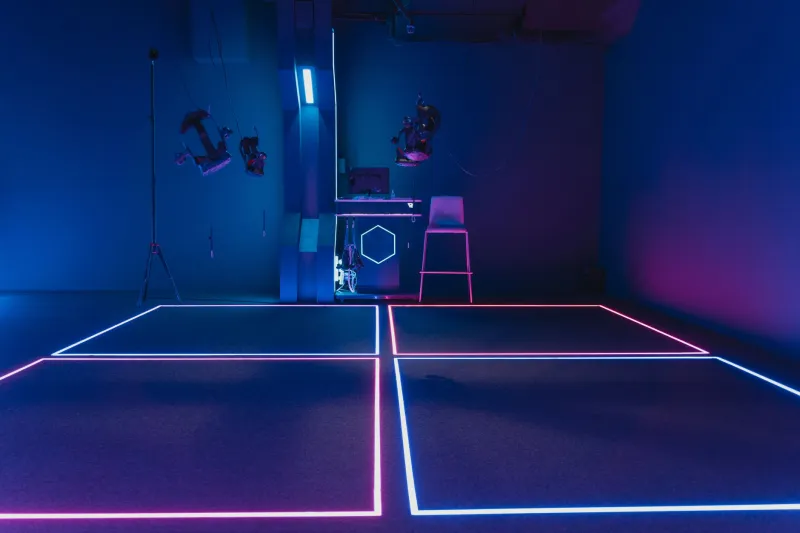
Log into Meta Horizon Worlds on a Tuesday afternoon and pick a world at random. Odds are decent you'll be alone. Maybe you'll find a world with two or three other users, their blocky avatars standing near each other in a way that reads less like socializing and more like waiting for a bus that isn't coming.
This is social VR in 2024 — not dead, exactly, but not what anyone promised.
The Dream That Sold a Generation on Headsets
Remember the pitch? Social VR was going to be the next internet. You wouldn't just browse — you'd be there. You'd meet friends in virtual coffee shops, attend concerts, collaborate in virtual offices, and eventually just... live a meaningful chunk of your life in immersive shared space. Mark Zuckerberg rebranded an entire $800 billion company around this idea. Millions of Quest headsets shipped with Horizon Worlds pre-installed. The hype was enormous.
The reality has been something else entirely. Horizon Worlds has been the subject of relentless mockery since its launch — from the notorious legless avatar memes to a leaked internal memo in which Meta's own VP of Metaverse acknowledged that employees weren't even using the product they were building. Monthly active user counts for the platform reportedly peaked around 300,000 in early 2022 and have been difficult to pin down since Meta stopped reporting them publicly.
Rec Room, which had real momentum as a cross-platform social gaming space, has seen its VR-specific engagement plateau even as its flat-screen player base grew. The irony is pointed: the social VR platforms that survived did so partly by becoming less VR.
AltspaceVR — once the most earnest attempt at a community-first virtual social space — was shut down by Microsoft in early 2023. VRChat, the scrappy survivor of the bunch, maintains a dedicated user base but has spent years fighting the perception that it's a niche space for anime avatars and late-night weirdness rather than a mainstream social destination.
Why Social VR Keeps Failing the Same Way
The failure pattern is consistent enough that it's almost boring to document at this point. Every social VR platform launches with a vision of organic community formation, runs headlong into the cold-start problem — nobody wants to be in an empty space — and then tries to solve emptiness with events, featured worlds, and algorithmic nudges. It rarely works.
The core issue is something researchers who study online community formation have understood for decades: social spaces don't become valuable because they're technically impressive. They become valuable because specific groups of people claim them for specific purposes, develop shared norms, and create reasons to return.
Big social VR platforms have consistently tried to engineer this top-down. Meta built Horizon Worlds as a destination, then tried to attract creators to populate it, then tried to attract users to visit those creators' worlds, then tried to make the whole thing feel alive with events. Each step was reactive. None of it created the bottom-up community formation that makes a social space feel real.
"You can't manufacture belonging," says one longtime VRChat community organizer we spoke with, who runs a weekly virtual book club with a stable group of about 30 regulars. "The platforms that keep failing are the ones that think if they build a beautiful enough room, people will figure out what to do in it. That's not how people work."
The Retention Numbers Tell the Real Story
User acquisition in social VR has never been the problem — headset sales create a built-in funnel. Retention is where everything falls apart. Industry analysts who track VR platform engagement consistently report 30-day retention rates for social VR platforms in the single digits. Users try the platform, find it disorienting or empty or both, and don't come back.
This isn't just a content problem. It's a friction problem. Putting on a headset to hang out with friends requires that your friends also own headsets and are willing to put them on at the same time. The coordination overhead is brutal compared to just opening Discord. Until social VR can solve the asymmetric access problem — letting non-headset users participate meaningfully in shared virtual spaces — the addressable audience for any given social VR session stays tiny.
Horizon Worlds added a web browser version. Rec Room has always been cross-platform. VRChat has a desktop mode. These are the right instincts, but they create a different problem: the experience for headset users degrades when the space fills up with flat-screen participants who move and interact differently. The social contract gets weird fast.
What's Actually Working — and Why
Here's the part of the social VR story that doesn't get enough coverage: small, focused communities are thriving. Not at Horizon Worlds scale — nothing is — but in ways that are genuinely sustainable and meaningful to the people in them.
Weekly VRChat meetups organized around specific interests — language learning groups, meditation sessions, tabletop RPG campaigns, support groups for people with social anxiety who find face-to-face interaction easier in VR — have retention rates that would make any platform manager envious. Some of these groups have been meeting consistently for three or four years.
The pattern in every successful social VR community is the same: a specific shared purpose, a consistent schedule, a small enough group that individuals are recognized and remembered, and a community manager or organizer who keeps the energy going. None of this requires a billion-dollar platform. It requires a world, a time, and people who care.
Niche gaming communities within Rec Room and VRChat — competitive players, speedrunners, world-builders — show similar durability. When the social VR space has a reason to exist beyond "hang out," people find reasons to show up.
The Smaller Bets Worth Watching
While the big platforms struggle, a few smaller players are quietly doing interesting things. Bigscreen VR has built a genuinely sticky community around a simple premise: watching movies together in virtual space. The use case is specific, the experience is well-executed, and users have a reason to come back that doesn't require them to invent their own fun.
Mozilla Hubs, despite running on a shoestring compared to Meta's metaverse budget, has found a home in educational and professional communities who value its open-source, no-headset-required approach. Spatial has carved out a niche in virtual art galleries and professional networking that feels less like a ghost town because it targets users who have a specific reason to be there.
The lesson from all of these is the same one the big platforms keep ignoring: social VR works when it's a tool for something, not when it's a destination for nothing in particular.
Where This Leaves the Vision
Social VR isn't dead. But the version of it that was supposed to replace the internet, host the next generation of human connection, and justify renaming a company Meta — that version is on life support at best.
What survives will look less like a virtual world and more like a virtual venue: specific, purposeful, designed for a community that already exists rather than a community someone hopes will materialize. That's a smaller vision than the one that got everyone excited. It's also, probably, the real one.
For anyone still looking for genuine social connection in VR, the advice from the communities that have actually figured it out is straightforward: skip the featured worlds, find a niche community organized around something you already care about, and show up consistently. The empty lobbies are real — but so are the rooms where people have been showing up for years.