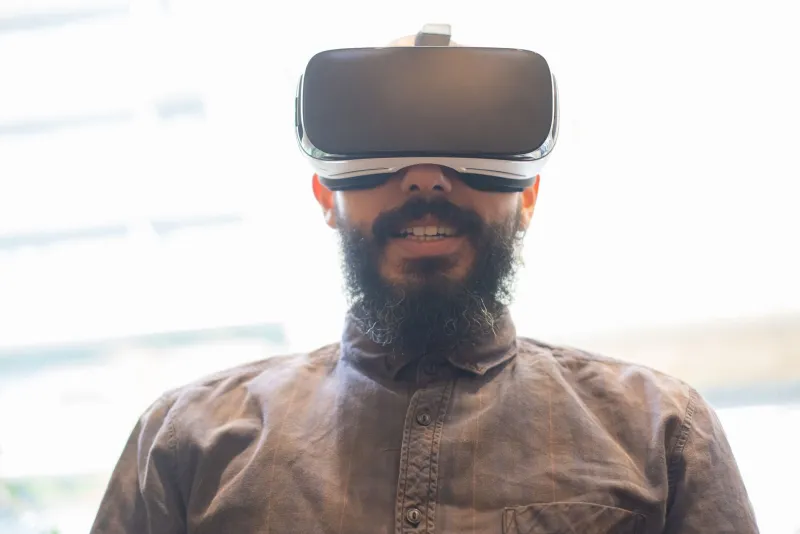
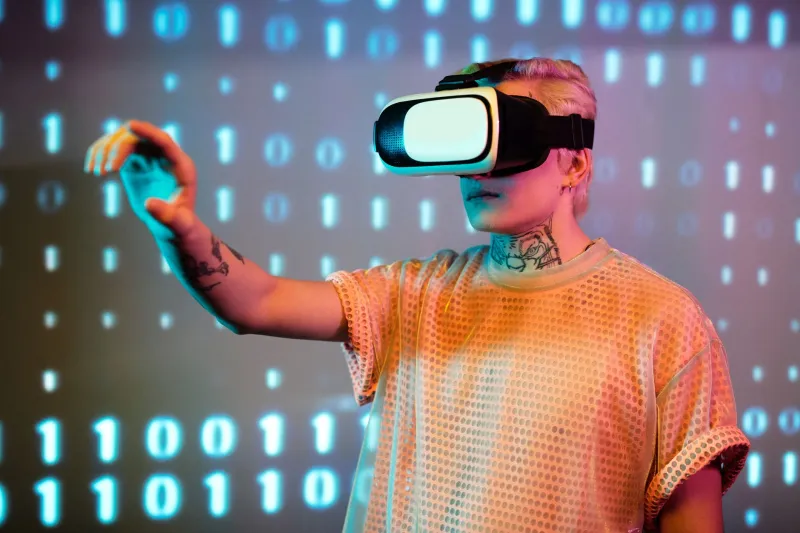
From Day-One Obsession to Dusty Shelf: The Real Reason VR Fitness Fails You
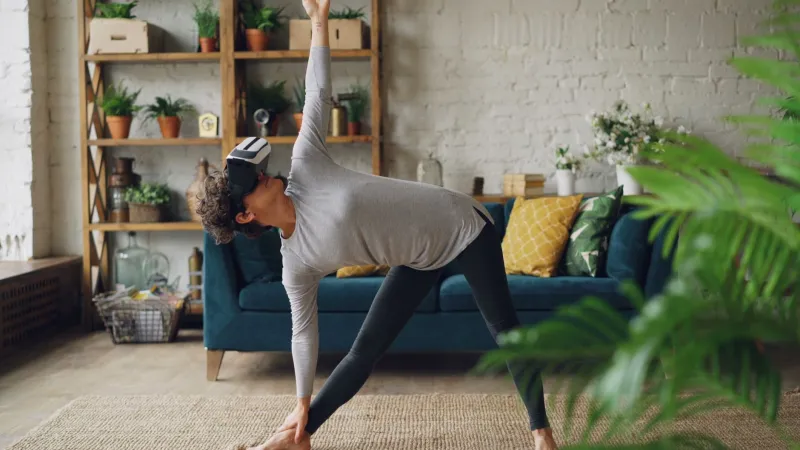
The pitch is almost impossible to resist. Strap on a headset, swing your arms like you're dodging asteroids or slicing through neon blocks, and suddenly cardio doesn't feel like cardio anymore. For a lot of people who picked up a Quest or another headset in the last few years, VR fitness wasn't just a novelty — it felt like the answer to every excuse they'd ever made about skipping the gym.
Then week four arrived. And the headset didn't.
If that sounds familiar, you're not alone — and you're not lazy. There's something structurally weird about VR fitness that makes it uniquely prone to the dropout problem, and it goes a lot deeper than "the novelty wore off."
The Honeymoon Is Real (That's Actually the Problem)
Here's the thing about VR fitness apps like Beat Saber, Supernatural, FitXR, or Les Mills Body Combat: they genuinely work in week one. Your heart rate spikes. You're sweating through your shirt. You're having fun doing it. That combination is rare enough in traditional fitness that it feels almost miraculous the first time it clicks.
But that initial high is partly a cognitive trick. Neuroscience research on immersive environments shows that novelty itself is a performance enhancer. When your brain is busy processing a new visual world, interpreting spatial audio cues, and coordinating unfamiliar physical movements, it floods your system with dopamine. You're not just working out — you're exploring. The effort feels lower because your attention is split.
The problem? Novelty has a shelf life. By week three, your brain has mapped the mechanics. The songs in your rotation feel familiar. The environments stop surprising you. And when the novelty fades, what you're left with is just... exercise. Except now it comes with the friction of putting on a headset, clearing your living room, and making sure the battery is charged.
Traditional fitness has the same dropout curve — most gym memberships go unused by February — but VR adds a layer of setup friction that a pair of running shoes simply doesn't have.
What Developers Say (And What They're Not Saying)
VR fitness developers are well aware of the retention cliff. Several have quietly restructured their content models in response to it. Supernatural, for example, pushes out new workouts daily and has leaned hard into coach-led sessions with personality-driven instructors — essentially borrowing the Peloton playbook and wrapping it in an immersive shell.
The goal is to shift the hook from "this environment is cool" to "I have a relationship with this experience." It's the same reason people stay loyal to a spin class instructor even after the novelty of cycling in a dark room with loud music has long since faded.
But not every app has the content budget of Supernatural. Plenty of VR fitness titles ship with a fixed library and minimal updates, which means users hit the content ceiling fast. When you've played every song in a rhythm game on every difficulty, there's no new mountain to climb — just the same hills you've already conquered.
There's also a metrics problem. Traditional fitness apps are obsessed with data: calories burned, heart rate zones, progressive overload tracking. Most VR fitness apps still prioritize score and performance within the game over health-focused metrics. That's fine for gamers, but for someone trying to lose weight or train for a 5K, the feedback loop feels hollow. You beat your high score — great. Did you actually get fitter? The app often can't tell you.
The Space Problem Nobody Talks About
Here's a friction point that's almost entirely overlooked in VR fitness marketing: most Americans don't have a dedicated VR space. The living room has to be rearranged. Furniture gets pushed back. The dog gets locked in another room. Kids get shooed away.
For a once-a-week novelty session, that setup cost is acceptable. For a daily fitness routine? It becomes a genuine barrier. Research on habit formation consistently shows that reducing friction is more important than increasing motivation. The harder something is to start, the more willpower it requires — and willpower is a depleting resource.
A gym bag by the door, a yoga mat already rolled out, running shoes sitting next to the couch — these are low-friction triggers. A headset that needs charging, a room that needs clearing, and a guardian boundary that needs resetting every time you rearrange your furniture? That's a ritual, not a routine.
The Multiplayer Gap
One of the most underrated drivers of long-term fitness adherence is social accountability. Group fitness classes, running clubs, gym buddies — the data is pretty clear that people work out more consistently when other people are involved. It's harder to skip a workout when someone's waiting for you.
VR fitness has made some progress here. FitXR added multiplayer classes. Some apps support avatar-based group workouts. But the social layer in most VR fitness experiences still feels bolted on rather than central. The default experience is solo, silent, and isolated — which is fine for meditation but not ideal for sustaining a fitness habit over months.
Until VR fitness apps make shared, real-time social experiences as seamless as hopping into a Peloton live class, they're leaving one of the most powerful retention tools on the table.
How to Actually Stick With It
None of this means VR fitness is a lost cause. It just means you have to be smarter about how you approach it. A few strategies that actually help:
Treat it like a scheduled class, not a spontaneous activity. Put it on your calendar. Same time, same days. The headset should be charged and ready before the session is supposed to start — not something you figure out when motivation strikes.
Build a dedicated space, even a small one. Even a 6x6 foot cleared area that stays clear makes a massive difference. If the setup is already done, the barrier to starting drops significantly.
Mix VR with traditional fitness, don't replace it. VR works best as a supplement — high-intensity cardio sessions two or three times a week — rather than a complete fitness solution. Trying to do everything in VR puts too much pressure on the novelty factor to carry you.
Chase progression, not high scores. Use a fitness tracker alongside your VR sessions. Heart rate data, calorie estimates, and week-over-week comparisons give you the health feedback loop the apps often can't.
Find a workout buddy, even a virtual one. Some apps support real-time multiplayer. Use it. Even just texting a friend your score after a session creates a tiny accountability loop that compounds over time.
The Verdict
VR fitness isn't broken — it's just misunderstood. The industry sold it as a replacement for traditional exercise when it's really a powerful but specific tool. The dropout rate isn't a failure of willpower; it's a predictable response to novelty fatigue, setup friction, and content ceilings that most apps haven't solved yet.
The headsets that end up as paperweights usually got there because the owner expected VR to do the motivating for them indefinitely. The ones that stay in rotation belong to people who built systems around them.
Your $500 headset can absolutely earn its keep as a fitness tool. It just needs a little more structure than the marketing suggested.