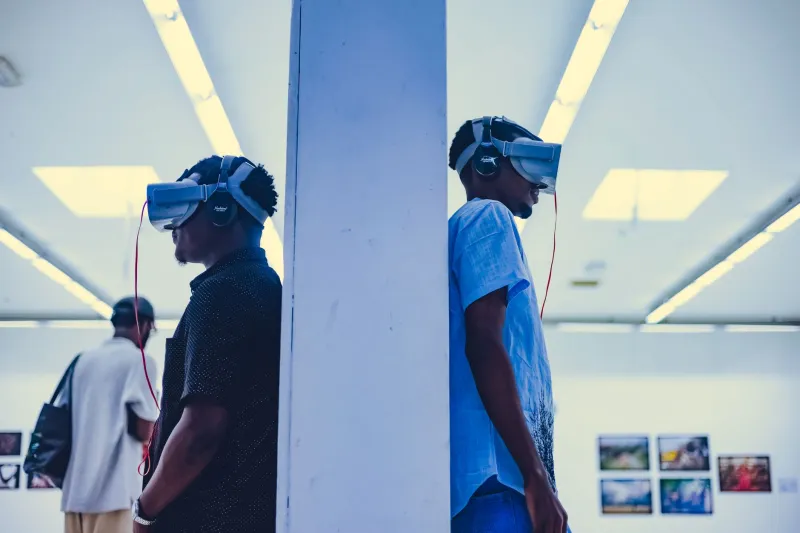
Digital Dust: The Hidden Forces Erasing VR Experiences and How to Fight Back
Imagine spending weeks exploring a breathtaking immersive world — a VR experience that genuinely moved you, challenged you, maybe even changed the way you think about what interactive media can be. Now imagine logging in one morning to find it's just... gone. No warning. No archive. No way back.
This isn't a hypothetical. It's a pattern that's been quietly accelerating across every major VR platform, and if you've been in the headset game for more than a couple of years, there's a solid chance it's already happened to you. The VR content graveyard is real, it's growing, and the industry has been remarkably quiet about it.
Let's dig into why this keeps happening — and more importantly, what you can actually do about it.
Why VR Experiences Vanish in the First Place
The short answer is: it's complicated. The longer answer involves a tangle of licensing deals, platform economics, and the fundamental instability of the independent developer ecosystem.
Licensing is probably the biggest culprit most people don't think about. A huge portion of VR content — especially experiences built around real-world IP, music, film footage, or branded environments — exists under time-limited agreements. When those agreements expire and renewal costs outweigh projected revenue, the content disappears. This is especially brutal for immersive experiences that were never designed to be evergreen products. A VR concert experience tied to a specific artist tour? Gone when the contract lapses. A cinematic VR piece that licensed third-party footage? Same story.
Then there's the platform side of the equation. When a storefront shuts down or pivots its content strategy — something that's happened repeatedly across the VR industry — entire libraries can get wiped with minimal notice. Oculus Go's content ecosystem didn't survive the transition to Quest. Viveport has cycled through its catalog multiple times. PlayStation VR's library had significant gaps when PSVR2 launched. Each of these transitions left casualties.
Small and mid-size developers face a separate but equally brutal problem: sustainability. Building VR content is expensive, and the addressable market, while growing, is still relatively niche compared to flat-screen gaming. When a studio shuts down or gets acquired, their back catalog often enters a legal gray zone where nobody has clear authority to maintain or redistribute it. The experience doesn't get preserved — it just quietly rots on servers until those servers get decommissioned.
The Digital Ownership Illusion
Here's the uncomfortable truth that most platform terms of service are designed to obscure: when you buy a VR experience, you're almost never actually buying it. You're purchasing a license to access it under conditions the platform controls. That's a fundamentally different thing, and the distinction matters enormously when content starts disappearing.
This isn't unique to VR — it's the same dynamic that's caused headaches in digital gaming, film streaming, and ebook markets for years. But VR has some specific characteristics that make it worse. The experiences are often more technically complex to archive, the file sizes are enormous, and the dependency on proprietary hardware and software layers makes emulation genuinely difficult. A VR experience isn't just a video file or a game executable — it's a layered system of assets, interaction logic, and platform-specific rendering pipelines.
The result is that even technically sophisticated users face real barriers to preservation that don't exist in other media formats.
What the Preservation Community Is Doing About It
There are people fighting this battle, and they deserve more recognition than they get. Organizations like the Internet Archive have made tentative moves toward software preservation that could eventually benefit VR content, though the format-specific challenges remain significant. Academic institutions — particularly those with game studies or digital humanities programs — have started exploring VR archiving methodologies, though funding and scale are persistent obstacles.
Within the VR community itself, dedicated enthusiasts have created informal networks for documenting and preserving experiences before they disappear. Reddit communities, Discord servers, and independent wikis have become de facto archives for metadata, screenshots, and sometimes the experiences themselves — though the legal gray areas around user-side archiving make this a complicated space to navigate.
Some developers have taken matters into their own hands by open-sourcing their projects or releasing standalone versions that can survive platform shutdowns. This is still rare, but it's a genuinely promising model for preservation-minded creators.
Practical Steps You Can Take Right Now
Okay, so the industry has a problem and institutional solutions are still catching up. What can you actually do as an individual user to protect the experiences you care about?
Document everything. This sounds basic, but it's undervalued. Record gameplay footage of experiences you love. Write detailed notes about what made them special. Capture screenshots. This won't preserve the interactive experience, but it creates a meaningful record — and sometimes that's the best available option.
Stay alert to shutdown signals. When a developer goes quiet on social media, when a platform announces a major pivot, when a studio gets acquired — these are warning signs worth paying attention to. If something you care about is showing signs of being at risk, prioritize experiencing and documenting it now rather than assuming it'll be there later.
Check for standalone versions. Some VR experiences have been released in formats that don't depend on a single platform's continued goodwill. SteamVR titles, for instance, tend to have slightly better long-term survival odds than platform-exclusive content, because the underlying files are more accessible. Always check whether an experience you love has a more portable version available.
Support developers directly. When developers have direct revenue streams — through Patreon, direct sales, or similar models — they have more control over their own content's fate. Platform dependency is partly an economic problem, and direct support helps reduce it.
Advocate loudly. The VR community's collective voice has real influence, and preservation is a cause worth raising. Push platforms publicly to implement clearer sunset policies, longer deprecation windows, and archival access for discontinued content. The gaming community has won meaningful policy changes through sustained advocacy — there's no reason the VR community can't do the same.
The Bigger Picture
The disappearing content problem is, at its core, a question about what kind of medium we want VR to be. Film survived its early years partly because dedicated archivists — sometimes working outside official channels — understood that preserving the medium was worth the effort. Games have a growing preservation infrastructure that, while imperfect, reflects a community that takes its history seriously.
VR is young enough that the decisions made now about preservation, ownership, and platform responsibility will shape what survives for future audiences. The experiences being created today are genuinely significant cultural artifacts — they represent a new way of inhabiting media, of feeling presence inside a story or a world.
Losing them to expired licenses and decommissioned servers would be a real shame. And it's not inevitable — not if the community, the developers, and eventually the platforms start treating preservation as a first-class concern rather than an afterthought.
The graveyard is real. But it doesn't have to keep growing.