Inside the Inmo Costa Noroeste Virtual Tour: What This Immersive Property Experience Gets Right

If you've ever tried to buy property in another country — or even another state — you know the pain of relying on flat photos and a real estate agent's enthusiastic descriptions. "Cozy" means something very different depending on who's writing the listing. That's exactly why virtual property tours have become one of the most practical, no-nonsense applications of immersive technology, and the Inmo Costa Noroeste virtual tour is a compelling case study in getting the formula right.
Inmo Costa Noroeste is a real estate agency operating along Spain's northwestern coast, a region that's quietly attracted international attention for its dramatic landscapes, mild climate, and comparatively accessible property prices. Their virtual tour offering brings that market directly to prospective buyers — no transatlantic flight required.
What You're Actually Looking At
When you load the Inmo Costa Noroeste virtual tour, you're dropped into a fully navigable 360-degree walkthrough of featured properties. The experience uses a browser-based format, which means you don't need a headset to get the core value. That's a smart call. Most property buyers — including American ones browsing international real estate — aren't going to strap on a Meta Quest just to look at a living room. They want to click around from their laptop during a lunch break.
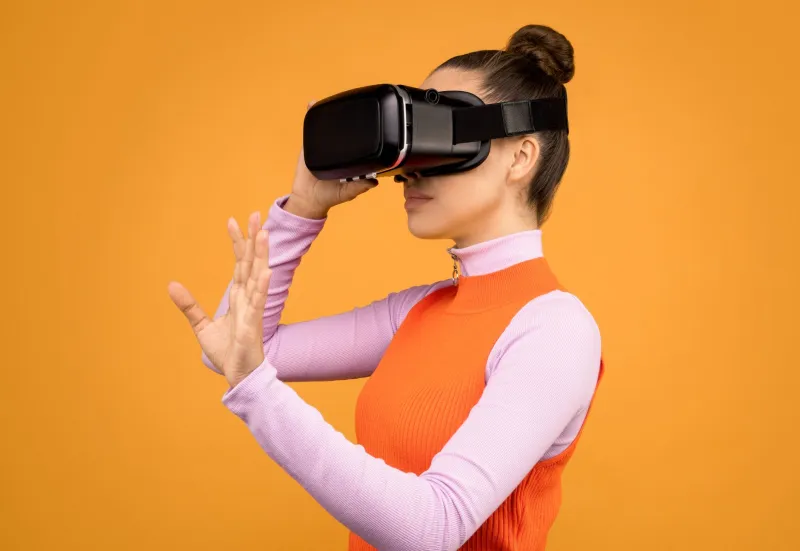
That said, the tour is fully compatible with VR headsets, and if you do have one, the experience jumps to another level entirely. Walking through a property in full stereoscopic 3D, being able to gauge ceiling height and room proportion with your own eyes rather than guessing from a wide-angle lens photo — that's genuinely useful information for a buyer.
The navigation is intuitive: hotspot-based movement lets you jump between rooms, exterior views, and outdoor spaces. Ambient audio in some sections adds a layer of environmental context that flat photos simply can't replicate.
Why This Matters for the US Market
American buyers are increasingly looking abroad for investment properties, retirement destinations, and vacation homes. Spain's northwestern coast — Galicia in particular — has been showing up more frequently in those conversations. The region offers coastline without the overcrowding of the Costa del Sol, and property prices that look attractive compared to anything in California, Florida, or the Pacific Northwest.
But the distance creates a real friction problem. Flying to Spain to tour three or four properties before making a decision is expensive and time-consuming. Virtual tours don't fully replace an in-person visit before closing a deal, but they do something critically important: they help buyers eliminate options fast.
If you load up a virtual tour and immediately realize the property layout doesn't work for your lifestyle — the kitchen is too small, the bedrooms are awkwardly arranged, the backyard is basically a postage stamp — you've saved yourself a trip. That's real money and real time back in your pocket.
The Immersive Tech Behind the Experience
The Inmo Costa Noroeste tour appears to be built on a platform using photogrammetry and 360-degree camera capture, which is the current industry standard for real estate virtual tours. It's not a synthetic 3D render — you're looking at actual photographs stitched together into a navigable environment.
This approach has trade-offs. The image quality is tied directly to the equipment and lighting conditions at the time of capture. A cloudy day during the shoot can make a sun-drenched coastal property look dull. Some tours handle this better than others, and the better agencies are investing in professional capture teams rather than handing a 360 camera to whoever happens to be available.
What sets quality tours apart is the attention to completeness. The best immersive property experiences don't skip the utility room, the garage, or the view from the master bedroom window. They understand that buyers are trying to mentally inhabit a space, and every omission creates doubt.
Headset vs. Browser: Which Way Should You Go?
For casual browsing, the browser experience is genuinely fine. If you're doing initial research, comparing multiple properties, or just getting a feel for the region, sitting at your desk and clicking through is perfectly adequate.
But if you're seriously considering a property — if you've narrowed it down to two or three options — loading it up in a VR headset is worth the extra step. The spatial awareness you get in VR is qualitatively different. Room size reads differently. The relationship between indoor and outdoor spaces becomes clearer. You start noticing things — the angle of light through a window, the proximity of neighboring buildings — that just don't register the same way on a flat screen.
If you've got a Meta Quest 3, a PlayStation VR2, or even an older Quest 2 gathering dust, fire up the browser in VR mode and walk through the property properly. It takes maybe ten extra minutes and it's a meaningfully better experience.
The Bigger Picture
The Inmo Costa Noroeste virtual tour is a good example of immersive technology doing exactly what it should: solving a real problem for real people without requiring them to become tech enthusiasts to benefit from it.
The real estate industry has been one of the quieter success stories of VR and 360-degree immersive tech. While the gaming and entertainment sectors have grabbed most of the headlines, property tours have been steadily improving, building genuine utility, and reaching audiences who would never describe themselves as VR users.
For anyone in the US with an eye on European property — whether that's a Galician farmhouse, a coastal apartment, or a rural retreat — virtual tours like this one are changing the research process in meaningful ways. You can now develop a real sense of a property before you ever book a flight. And in a market where transatlantic travel costs what it does, that's not a small thing.
Keep an eye on how agencies like Inmo Costa Noroeste continue to develop their immersive offerings. The technology is only getting better, and the agencies that invest in quality capture and presentation now are going to have a serious advantage as international buyer expectations continue to rise.