Why Your VR Controllers Die Before Everything Else — And Who's Responsible
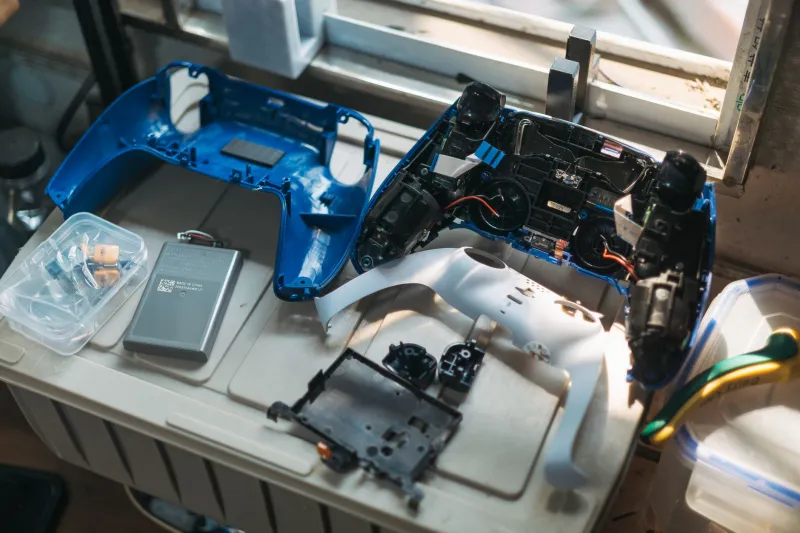
You spent $400, $500, maybe more on a VR headset. The display still looks great. The lenses are fine. But the controllers? One drifts, one won't hold a charge, and replacement parts are either backordered or priced like they're made of aerospace titanium. If that sounds familiar, you're not alone — and you're not unlucky. You're experiencing a pattern that independent repair technicians have been watching for years.
VR controllers are, statistically speaking, the first thing to break in any headset ecosystem. And the reasons why go a lot deeper than "you used them too hard."
The Lifespan Problem Nobody Puts in the Brochure
Most VR headset manufacturers publish specs for display resolution, refresh rates, and field of view. None of them publish expected controller lifespan. That omission is doing a lot of work.
Independent repair shops that specialize in consumer electronics — particularly those that have started taking in VR hardware as the market has matured — report a consistent pattern: controllers arrive for service at dramatically higher rates than the headsets they're paired with. The failure modes are predictable, too. Thumbstick drift shows up first, usually within 12 to 18 months of regular use. Battery degradation follows close behind, with some units holding less than 60 percent of original capacity by the two-year mark. Then come the tracking ring cracks, the grip button failures, the haptic motors that stop firing cleanly.
The headsets, by contrast, tend to keep working. The screens don't drift. The processors don't suddenly forget how to process. It's the things you physically touch — repeatedly, forcefully, in the middle of intense virtual experiences — that fall apart first.
That's not a coincidence. It's physics meeting design philosophy.
What's Actually Inside That Controller
Crack open a modern VR controller (carefully, and ideally after it's already broken — warranty voiding is real) and you'll find a surprisingly dense collection of components packed into an ergonomic shell that wasn't designed with your screwdriver in mind.
The thumbstick mechanisms are typically sourced from the same supplier pool used by traditional gamepad manufacturers. The problem is that VR controllers demand a different kind of stress. In flat-screen gaming, you're nudging a stick with your thumb. In VR, you're doing that while also gripping, twisting, punching, swinging, and sometimes full-on flailing. The wear patterns are completely different, and the components weren't upgraded to match.
Battery placement is another issue. In many popular controllers, the cells are positioned in ways that make them genuinely difficult to access without specialized tools or risking damage to the surrounding housing. Repair technicians describe situations where a straightforward battery swap — a 10-minute job on a well-designed device — turns into an hour-long operation with a real chance of cracking the shell or snapping a ribbon cable. That complexity isn't accidental. It's a consequence of prioritizing slim, ergonomic form factors over serviceability.
The Drift Epidemic and the Suppliers Behind It
Thumbstick drift has become such a widespread issue in gaming hardware generally that it's spawned lawsuits, Reddit communities, and a cottage industry of replacement parts. In VR, the problem is arguably worse because drifting controls don't just ruin your aim — they break immersion entirely. A controller that thinks you're pushing left when you're not will send your virtual hands wandering and yank you right out of whatever world you were inhabiting.
The root cause is mechanical wear on potentiometers — the sensors that read stick position. These components have physical contact points that degrade with use. Higher-quality alternatives exist, including Hall effect sensors that use magnets instead of contact points and last significantly longer. Some controllers have begun adopting this technology. Most haven't, because the cost difference at scale is real and the competitive pressure to hit certain price points is intense.
This is the part manufacturers won't say out loud: they know Hall effect sticks last longer. They know the potentiometer-based components they're using have a finite and relatively short wear cycle. They've done the math, and the math apparently works out in their favor.
What the Repair Community Has Figured Out
The good news — and there is some — is that a growing network of independent VR repair technicians, iFixit contributors, and hardware-obsessed community members have been reverse-engineering these failure points and sharing what they find.
Here's what the collective wisdom looks like right now:
On thumbstick drift: Third-party thumbstick modules compatible with popular controller platforms are available from suppliers on platforms like AliExpress and through specialty electronics retailers. Replacing them requires patience and basic soldering skills, but it's doable. Search your specific controller model plus "thumbstick replacement" on YouTube before you give up.
On battery life: Avoid leaving controllers on the charging dock indefinitely. Lithium-ion cells degrade faster when held at 100 percent charge for extended periods. Charge to full, unplug, use them. Some enthusiasts charge only to around 80 percent for daily use and top off before long sessions — a habit borrowed from EV and laptop battery management.
On grip and housing cracks: The tracking rings on some controllers are structurally vulnerable, especially at the points where they connect to the body. Avoid storing controllers in ways that put lateral pressure on those rings. A few manufacturers sell replacement rings, but supply is inconsistent. Third-party 3D-printed alternatives have started appearing and, for some models, are genuinely viable.
On haptic motor degradation: There's less you can do here preemptively, but turning down haptic intensity in your headset's settings extends motor life meaningfully. Full-blast haptics feel great but chew through those tiny motors faster than moderate settings.
The Bigger Picture for the VR Industry
Controller failure rates matter beyond individual frustration for a reason that's directly relevant to VR's long-term growth: they're a significant adoption barrier. Someone who drops serious money on a VR setup and then watches a controller fail within 18 months — only to find replacements are expensive, backordered, or discontinued — is not a person who recommends VR to their friends. They're a person who tells cautionary tales.
The industry has made genuine strides on headset comfort, display quality, and software ecosystems. Controller durability hasn't kept pace, and the repair story remains largely hostile to consumers. Right-to-repair advocacy has made some headway in the traditional electronics space, but VR hardware has largely flown under that radar.
Until manufacturers treat controller longevity as a selling point rather than a liability, the burden falls on users to be smarter about maintenance and more aggressive about seeking out repair resources before assuming a broken controller means buying a new one.
Keeping Your Controllers Alive Longer
None of this means you're helpless. A few habits make a real difference:
- Store controllers upright or in a case, not tossed in a bin where tracking rings can get stressed
- Clean thumbstick bases regularly with compressed air to remove debris that accelerates wear
- Calibrate controllers through your headset's settings app every few months to catch drift early
- Check your manufacturer's warranty terms — stick drift in particular has been covered under warranty replacements for some platforms when reported within the window
- Bookmark iFixit and community repair forums for your specific headset ecosystem before you need them
Your controllers are the most physically demanding components in your VR setup. Treat them accordingly, and push back on the idea that premature failure is just part of the deal. It doesn't have to be.