The 'Optional' Headset Meeting: How Corporate VR Quietly Stopped Being a Choice
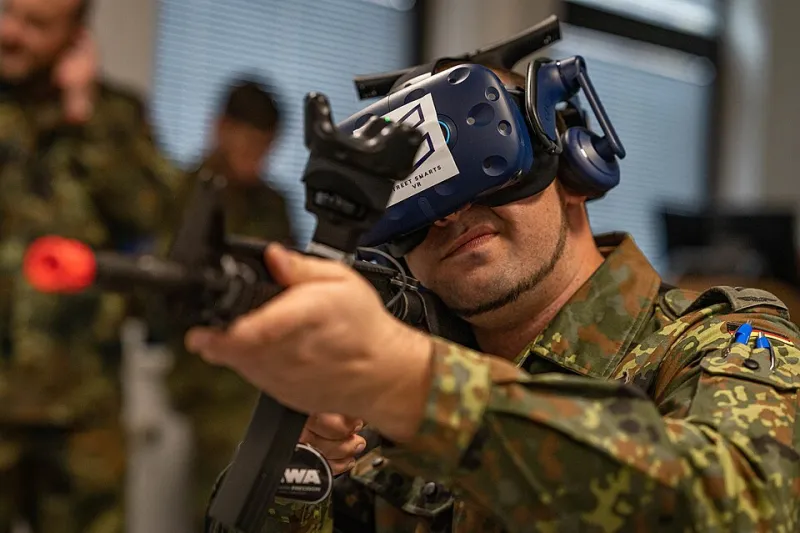
Photo: U.S. Air Force photo by Airman 1st Class Edgar Grimaldo, Public domain, via Wikimedia Commons
Nobody sends a memo announcing that a choice has stopped being one. It happens gradually. First, VR training is a pilot. Then it's "encouraged." Then it's in your performance dashboard with a completion percentage attached. By the time anyone asks whether it's mandatory, the answer is: functionally, yes.
That's where a lot of American workers are going to find themselves by 2026, if current corporate adoption patterns hold. And it's worth asking some uncomfortable questions before the headsets arrive at the office.
The Data Behind the Push — And It's Not Nothing
Let's be fair to the companies doing this, because the productivity numbers are real. Safety training delivered in VR consistently shows better retention than slide decks. A warehouse worker who's virtually dropped into a forklift near-miss scenario remembers that lesson in a way a PowerPoint can't replicate. Studies from major retailers and manufacturers have reported faster onboarding times and fewer workplace incidents among VR-trained cohorts.
For high-risk industries — energy, aviation, healthcare, logistics — the case is strong enough that resisting it feels almost unreasonable. Nobody wants to be the person who argued against better fall-protection training.
But there's a difference between "VR is a great tool for dangerous jobs" and "every employee must complete monthly immersive sessions," and that difference is where the trouble starts.
The Privacy Problem Nobody's Putting in the Handbook
A modern headset is a sensor array strapped to your face. It tracks where you look, how long you look, how your body moves, how quickly you react, and — in some enterprise platforms — physiological signals like pupil dilation.
Now ask yourself: who owns that data? A compliance training module that logs "employee completed forklift module" is one thing. A system that records "employee hesitated 1.8 seconds longer than peer average when reviewing safety hazard" is something else entirely. That's not training data. That's a performance profile, and it's being generated whether or not anyone has told you.
Most enterprise VR vendors have privacy policies. Very few employees have read them, and fewer still have any negotiating power over them. In the US, there's no comprehensive federal framework governing biometric data collected at work — Illinois has its Biometric Information Privacy Act, and most states have nothing comparable. Your employer's headset policy is effectively your legal protection.
When 'Optional' Means 'Optional'
Here's the pattern to watch for. Companies rarely announce mandatory VR. Instead:
- Completion rates get folded into manager scorecards.
- Immersive sessions appear in onboarding checklists with deadlines.
- Non-completion is labeled a "coaching opportunity."
- Eventually, HR notes that the training "was available to everyone," and skipping it becomes evidence of disengagement.
None of these steps is a mandate. Together, they function as one. If you've ever worked anywhere, you know exactly how this game is played.
What You Can Actually Do
You don't have to accept this passively, and you don't have to be a Luddite about it either. A few practical moves:
Ask for the data policy in writing. Specifically: what's recorded, how long it's retained, who can access it, and whether it feeds performance evaluations. Asking this question alone changes behavior — managers often haven't thought about it.
Know your state's laws. If you're in Illinois, BIPA gives you real teeth, including private right of action. Elsewhere, check whether your state has any biometric or employee-monitoring statutes on the books. More are passing them every year.
Request accommodations properly. Motion sickness, vestibular disorders, and certain vision conditions are legitimate reasons VR sessions are inadvisable. Frame accommodation requests through HR in medical terms — that puts the employer on notice and creates a paper trail.
Push for data minimization, not bans. The reasonable position isn't "no VR training." It's "training data shouldn't outlive the training." Aggregate, anonymize, delete. That's a standard any company can meet if asked.
The Bottom Line
Immersive training can be genuinely great. It can also be a surveillance system with a tutorial attached. The technology doesn't decide which one it is — policy does, and policies get written when workers ask questions early enough.
So ask. Before 2026 arrives and the headset is already on your desk with a deadline attached.