I Do, in 360 Degrees: Inside America's First Wave of Headset Weddings
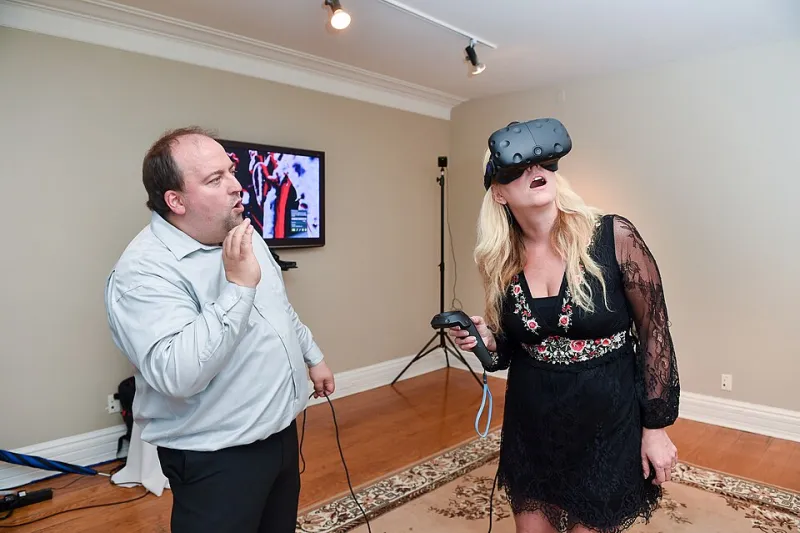
Photo: Canadian Film Centre from Toronto, Canada, CC BY 2.0, via Wikimedia Commons
The wedding industry has always been an early adopter of anything that promises to make a destination event feel less exclusive. Live-streamed ceremonies became standard after 2020. Drone footage followed. But the newest wrinkle is stranger and, honestly, more interesting: full VR attendance, where a remote guest straps on a headset and stands — as an avatar or a volumetric capture — in the middle of the aisle.
And here's the part that raised eyebrows at our editorial desk: some couples are asking remote guests to cover headset costs. We're talking $400 to $500 a head in some cases. That's real money, and it raises a fair question — is this genuine connection, or a very expensive way to feel like you were there?
From Phone-on-a-Tripod to a Seat at the Altar
The difference between a livestream and a VR ceremony is bigger than most people expect. A stream makes you an observer. A headset puts you spatially in the room. You can turn toward the couple, catch the groom's nervous laugh, and hear the vows rendered in spatial audio that actually comes from the right direction.
Event planners we spoke with describe a rapid maturation. Two years ago, a VR wedding meant a 360-degree camera on a tripod, and remote guests wandered a static capture. Today, vendors are doing live volumetric-ish captures, custom avatars synced to guest movements, and even virtual reception tables where remote and in-person attendees mingle between the ceremony and dinner.
One planner in Austin told us the shift came from guests themselves: "People got tired of watching their sister's wedding like it was a YouTube video. They wanted to be looked at. They wanted to be seen."
The $500 Question
Let's talk money, because that's where the trend gets contentious.
The hardware is the obvious cost. A standalone headset capable of handling a live social VR event runs roughly $300–$500. Some vendors offer rental pools — the couple rents ten headsets and ships them out — which drops per-guest cost to around $75–$120. Other couples push the purchase onto guests, framing it as a keepsake: "You'll use it again, promise."
Guests are... divided on that logic.
Add platform fees (live multi-user VR events often require hosted servers), a technical wrangler on the day of, and rehearsal sessions for remote guests who've never put on a headset, and the full production can run $2,000–$8,000 on top of a normal wedding budget. Compare that to a $500 livestream package and the math gets hard to defend — unless you believe, as one vendor put it, "the emotional math is different."
When It Works — and When It Really Doesn't
The success stories share a pattern. VR attendance shines when the remote guest would otherwise miss everything: a deployed service member, a grandmother who can't fly, a best friend stuck on an oil rig. In those cases, being spatially present — able to turn and be turned toward — beats a phone screen propped next to the cake.
The failures share a pattern too. Motion sickness is the big one; a guest who gets queasy after ten minutes is a guest who misses the vows. Older relatives struggle with headset interfaces, no matter how many rehearsal calls you schedule. And the social awkwardness is real — a remote guest laughing alone in a living room while everyone else clinks glasses at the reception can feel more isolating, not less.
One maid of honor described her experience with brutal honesty: "Standing in the virtual venue was beautiful. Taking the headset off afterward and being alone in my apartment was the loneliest I've felt at a wedding."
What Planners Are Learning
The vendors doing this well treat VR as one channel in a hybrid experience, not the centerpiece. Their rules of thumb:
- Never make VR the only option. Always run a parallel stream for guests who can't or won't wear a headset.
- Budget for a human. A dedicated "VR wrangler" handling headset setup, comfort settings, and audio on the day of is non-negotiable.
- Design for the remote guest. Position them where they can see faces, not just the backs of heads. Give them a role — a reading, a toast — so presence feels purposeful.
- Cap the session length. Thirty to forty minutes of headset time, then transition everyone to a normal video call for the reception.
So Is This a Trend or a Gimmick?
Here's our honest read: headset weddings won't replace open bars, and the $500-per-guest model is going to alienate more relatives than it delights. But the underlying idea — that a remote guest deserves spatial presence, not a flat video window — is genuinely good, and the technology is finally cheap enough to attempt it.
Expect the rental model to win. Expect prices to fall as competition grows. And expect at least one wedding invitation in your future with a line item you never thought you'd see: "Headset — included, please confirm your interpupillary distance."
That's a sentence nobody was writing five years ago. It might be on every invitation ten years from now.