Paying More, Suffering Longer: The Dirty Secret of High-End VR Headset Comfort
Let's talk about something the spec sheets won't tell you.
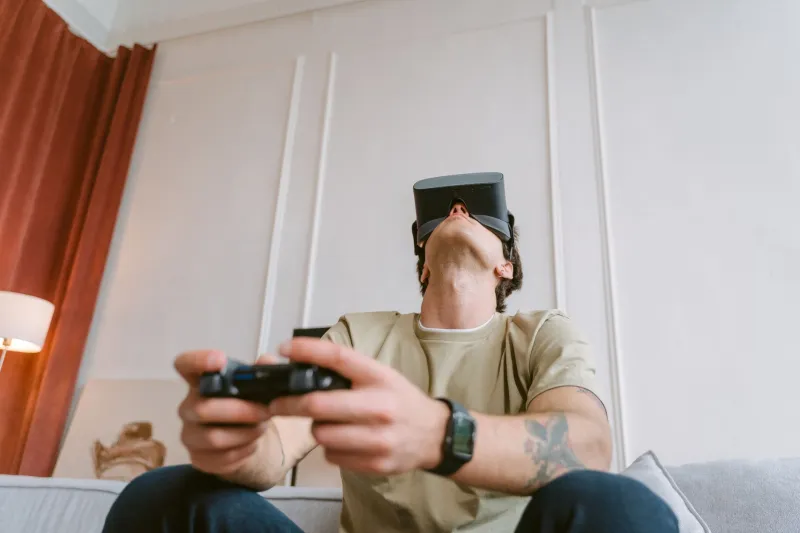
You saved up. You did the research. You dropped serious money on a professional-grade VR headset — the kind with the micro-OLED display, the eye-tracking, the crisp resolution that makes everything else look like a potato. And then you strapped it to your face for an hour and a half and walked away with a headache, a sore neck, and a creeping suspicion that you made a terrible mistake.
You're not alone, and you're not being dramatic. There's a genuine paradox baked into the premium VR market right now: the more you spend, the worse the experience can feel on your body. It's counterintuitive, it's frustrating, and it's almost entirely by design.
The Weight Problem Nobody Wants to Admit
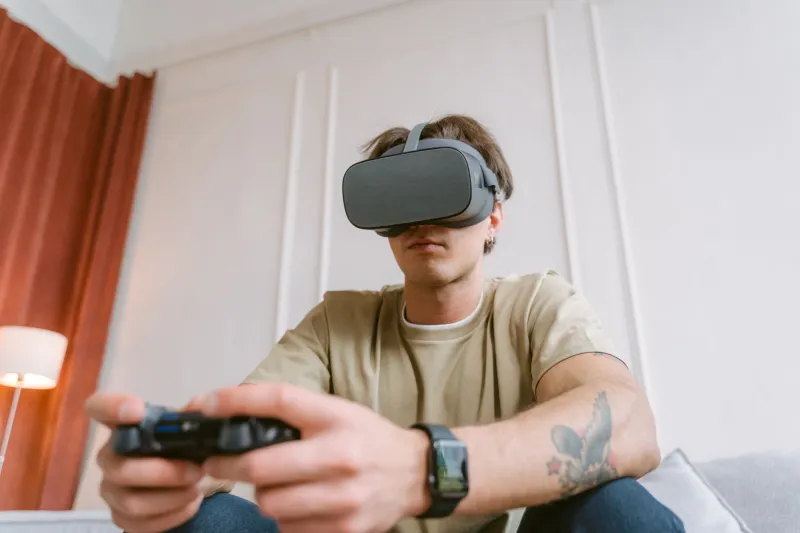
Here's the uncomfortable math. The Meta Quest 3 weighs around 515 grams. The Apple Vision Pro tips the scales at 600 to 650 grams depending on your configuration. That difference sounds trivial — we're talking about the weight of a can of soda. But strap either of those to your face and tilt your head forward slightly, and the physics get brutal fast.
Human heads weigh somewhere between 10 and 12 pounds. Your neck muscles are designed to manage that load when it's centered over your spine. The moment you add even 500 grams of hardware pushed forward of your center of gravity, the effective load your neck experiences spikes dramatically. Physical therapists call this the "head forward posture" problem, and it's the same mechanism that turns desk jobs into chronic neck pain factories.
Dr. Renee Castillo, a physical therapist based in Austin who works with tech workers and gamers, puts it plainly: "The issue isn't just the weight — it's where the weight sits. Most high-end headsets load the front heavily because that's where the lenses, displays, and sensors live. After 20 minutes, your posterior cervical muscles are working overtime. After 90, they're screaming."
Cheaper consumer headsets sometimes fare better here not because of superior engineering, but because they skip the hardware that makes premium devices heavy in the first place. Fewer sensors, simpler optics, lighter batteries — the trade-offs that look like compromises on paper actually reduce the biomechanical punishment your neck absorbs over a long session.
Thermal Management: The Hidden Comfort Killer
Weight is only half the story. The other half is heat — specifically, the heat generated by high-performance chipsets and high-resolution displays pressed directly against your face.
Consumer-grade headsets running modest processors generate modest heat. Professional headsets running cutting-edge silicon generate significantly more, and there's nowhere for that heat to go except into the foam padding against your forehead and cheekbones. After an hour, that padding isn't just damp — it's warm in a way that starts triggering your body's discomfort responses.
Ergonomic engineer Marcus Webb, who has consulted for several peripheral manufacturers (and asked us not to name them specifically), describes the design challenge: "Thermal management in a sealed facial interface is genuinely hard. You want to move heat away from the user's face, but you're working with a device that has to be light, quiet, and visually unobtrusive. Most manufacturers solve the problem by accepting that users will just deal with it."
Some higher-end headsets have experimented with active cooling — small fans, ventilation channels, mesh materials. But these solutions introduce noise, additional weight, or aesthetic compromises that marketing teams typically veto before the product ships. The result is a premium device that runs hot against your skin and quietly degrades your experience without you immediately identifying the source of your discomfort.
Why Manufacturers Keep Getting This Wrong
The honest answer is incentives. VR headsets are sold on specs. They're reviewed on specs. The YouTube thumbnails show resolution comparisons and field-of-view measurements, not neck strain assessments after 90-minute sessions.
A headset that scores 9/10 on display quality and 5/10 on wearability will outsell a headset that scores 7/10 on display quality and 9/10 on wearability — at least in the short term, before the returns start rolling in. Hardware companies have spent decades learning to optimize for the metrics that drive purchase decisions, and comfort metrics are notoriously hard to quantify in a way that shows up in a comparison chart.
There's also a professional market factor. Many high-end headsets are explicitly designed for enterprise and industrial use cases — architecture walkthroughs, surgical training, military simulation. In those contexts, sessions are often shorter, the hardware is worn by multiple users on rotation, and the buyer is a procurement manager evaluating capability rather than a consumer evaluating daily wearability. The comfort needs of a surgeon doing a 20-minute training simulation are genuinely different from a gamer planning a two-hour session.
The problem is that these enterprise-focused devices increasingly end up in consumer hands, worn by people with very different expectations and very different use patterns.
What Better Actually Looks Like
Some manufacturers are starting to take ergonomics seriously as a first-class design priority rather than an afterthought. The most effective interventions tend to cluster around a few key areas.
Counter-weighting is the simplest and most immediately effective fix. Moving battery mass to the rear of the headset shifts the center of gravity back toward the user's head, dramatically reducing the forward torque that punishes neck muscles. Several aftermarket accessories do exactly this for popular headsets, and the improvement in wearability is consistently dramatic.
Facial interface materials are getting more sophisticated. Silicone and memory foam alternatives breathe better, distribute pressure more evenly, and manage moisture more effectively than the standard foam padding most headsets ship with. A handful of third-party companies have built real businesses around replacement facial interfaces, which tells you something about how badly the stock options underperform.
Strap geometry matters more than most buyers realize. The difference between a basic elastic strap and a properly engineered halo-style strap can mean the difference between a device that feels wearable and one that feels like it's slowly sliding off your face while simultaneously crushing your temples. The physics here are straightforward — better strap designs distribute clamping force over more contact points — but executing them well adds cost and complexity that budget devices typically skip.
What You Should Actually Do Before You Buy
If you're shopping for a headset right now, here's the practical takeaway: don't evaluate comfort from reviews that were written after 30-minute demo sessions. Look specifically for long-session impressions — two hours, three hours, marathon gaming nights. Those are the reviews that will tell you what your neck and forehead will think about your purchase six months from now.
If you already own a headset that's making your life miserable after an hour, the aftermarket is your friend. Counter-weight battery packs, third-party facial interfaces, and upgraded head straps can transform the experience significantly. It shouldn't be necessary — these things should ship right — but the solutions exist and they work.
And if you're eyeing a $1,500+ professional headset for personal use, ask yourself honestly whether you need everything that makes it expensive. The specs might be genuinely impressive. The comfort might genuinely not be worth the premium over a well-configured consumer device.
At GuruVR, we believe immersive technology should feel as good as it looks. Right now, for a lot of expensive hardware, it doesn't. That's worth knowing before you swipe your card.