Why VR Loses You After 20 Minutes — And What Smarter Developers Are Doing About It
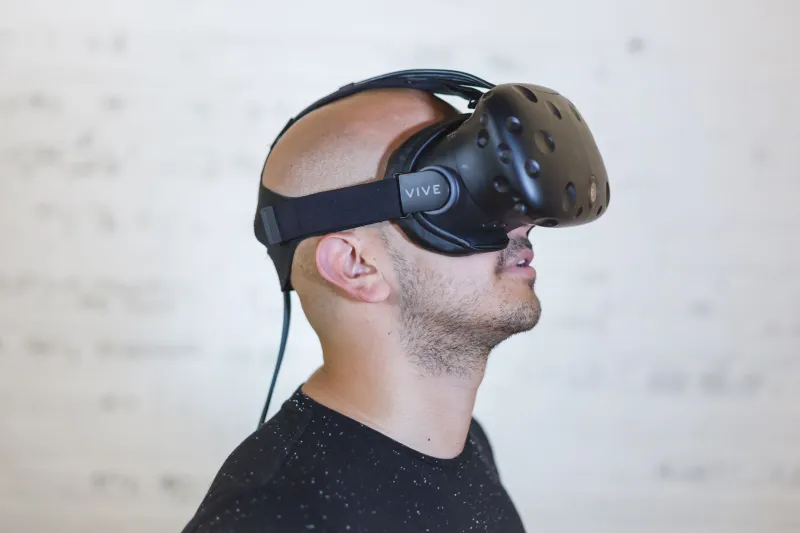
You strap on the headset, step into a new world, and for a few glorious minutes, everything is magic. Then, somewhere around minute eighteen, the spell starts to crack. You're still technically inside the experience — but mentally, you've already started thinking about what's for dinner.
This isn't a you problem. It's an industry problem. And it's one that the smartest developers in immersive tech are finally taking seriously.
The 20-Minute Wall Is Real — Here's Why
Neuroscientists have a name for what happens when the brain processes a genuinely novel environment: the orienting response. It's an ancient survival mechanism that floods your system with attention and alertness when you encounter something new. VR is basically a cheat code for triggering it — spatial audio, 360-degree visuals, and physical interaction combine to light up your prefrontal cortex like a pinball machine.
The catch? That response is designed to be temporary. "The brain is incredibly efficient," explains Dr. Mara Hendricks, a cognitive neuroscientist at UC San Diego who studies immersive media. "Once your nervous system decides an environment isn't threatening and isn't offering new survival-relevant information, it starts economizing. Attention drops. Arousal decreases. You get bored."
In a traditional video game, developers have decades of design wisdom — pacing curves, narrative escalation, reward loops — to fight that drop-off. VR is still figuring this out. And many current experiences, especially tech demos and early-generation titles, were built to impress in a five-minute Best Buy demo, not to hold someone for an hour on a Tuesday night.
Design Patterns That Kill Long-Term Interest
So what specifically goes wrong? Developers who've wrestled with this problem point to a few recurring culprits.
Novelty as the only hook. A lot of VR experiences front-load their best ideas. You arrive in a breathtaking environment, pick up an object that responds to your hands, maybe shoot something or paint something, and then... it's basically the same thing for the next thirty minutes. "We call it the 'wow then what' problem," says Marcus Yee, lead designer at a mid-sized Seattle studio currently developing a social VR platform. "The 'wow' gets people in the door. The 'what' is what keeps them there. A lot of teams spend ninety percent of their budget on the wow."
Cognitive overload masquerading as depth. Counterintuitively, cramming too much into a VR experience also tanks engagement. When users have to consciously manage locomotion, inventory systems, UI panels, and a complex narrative simultaneously, the brain burns through its working memory fast. Fatigue sets in not from boredom but from exhaustion — and the user's response is the same: they quit.
No meaningful stakes or progression. Traditional game design has long understood that players need to feel like their choices matter and that they're moving toward something. Many VR experiences — particularly experiential or artistic ones — resist this structure in the name of openness. The result is a beautiful environment that offers no reason to stay.
What the Successful Ones Do Differently
The VR experiences that consistently generate long session times share a few characteristics that, once you see them, you can't unsee.
They treat immersion as a rhythm, not a constant. The best experiences don't try to keep your brain at peak stimulation the entire time — they can't, and they don't try to. Instead, they alternate between high-intensity moments and quieter, more contemplative stretches. This mirrors the way great films and novels work: tension and release, action and reflection. "We actually map out our arousal curve the same way a screenwriter maps out a three-act structure," says Yee. "If the player is supposed to feel awe at minute twenty-two, we need them to feel calm at minute eighteen."
They give users agency that actually matters. The experiences with the stickiest retention aren't necessarily the most visually spectacular — they're the ones where users feel genuinely responsible for outcomes. Even small decisions, when they produce visible consequences in the world, engage the brain's reward circuitry and create investment. A puzzle you solved feels more memorable than a cutscene you watched.
They layer in discovery over time. Rather than revealing everything upfront, smart VR designers build in what some call "depth rewards" — details, mechanics, or narrative elements that only become apparent after extended exploration. This mirrors the design philosophy behind games like Outer Wilds or Return of the Obra Dinn, where the experience genuinely gets richer the longer you stay.
The Behavioral Science of Staying Power
Dr. Hendricks points to a concept called "flow state" — the psychologist Mihaly Csikszentmihalyi's framework for describing optimal engagement — as the real target that VR developers should be chasing. Flow happens when challenge and skill are roughly balanced: too easy and you drift off, too hard and you bail out.
"VR has a unique advantage here because it can adjust difficulty in ways that feel completely natural," she says. "The environment itself can respond to the user's behavior — slowing down if they seem overwhelmed, introducing complexity if they seem disengaged. That kind of adaptive design is still pretty rare, but it's where I think the most exciting work is happening."
A handful of studios are already experimenting with biometric-informed design — using heart rate data from fitness trackers or even headset-mounted sensors to detect when a user's engagement is flagging and dynamically adjusting pacing or challenge level in response. It sounds like science fiction, but the hardware to make it real is already in millions of American living rooms.
What This Means for the Industry's Future
The engagement problem isn't just a design challenge — it's a market challenge. VR headsets are still fighting the perception that they're expensive novelty items. Every user who bounces off an experience after twenty minutes and doesn't come back is a data point that reinforces that narrative.
But the developers getting this right are proving something important: immersive technology doesn't have to be a flash in the pan. When experiences are designed around sustained engagement rather than first-impression spectacle, users come back. They recommend the experience to friends. They spend more time — and more money.
The 20-minute wall isn't a ceiling. It's a design problem. And design problems, given enough smart people working on them, get solved.
The studios figuring that out right now are the ones that will define what VR actually becomes — not just what it was exciting to demo in 2024.