The Render on the Exhibit List: Inside VR's Slow Climb Into American Courtrooms
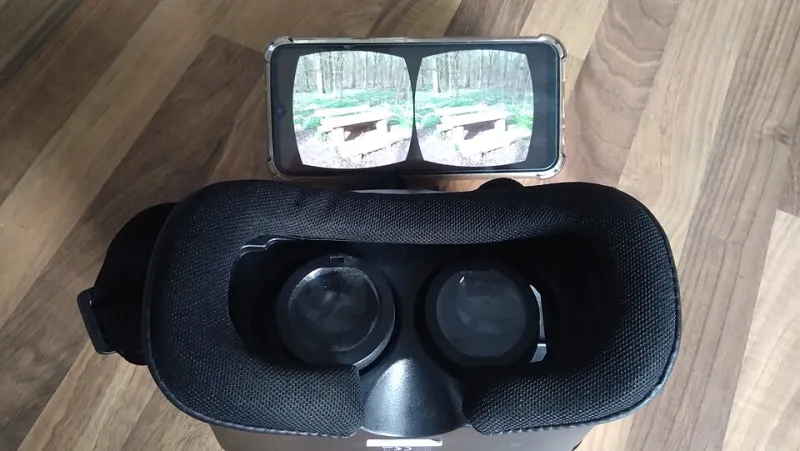
Photo: Bert Niehaus, CC BY-SA 4.0, via Wikimedia Commons
Imagine you are in a jury box in a Florida courthouse. The lights dim. Instead of a grainy surveillance video or a stack of crime-scene photos, you are handed a headset. Suddenly you are standing in the middle of the intersection where the crash happened. You can turn your head. You can look down at the skid marks. You can hear traffic. The lawyer says this is an exhibit. Your brain says this is a memory.
That is the promise and the problem of VR evidence in American courtrooms. Across the US, lawyers are experimenting with 360-degree video, photogrammetry scans, and immersive reenactments. Some judges are letting them in. Others are slamming the door. And almost everyone involved is still arguing about what happens when a simulation becomes an exhibit.
From Crime Scene to Headset
The technology is not science fiction anymore. A crash reconstruction expert can laser-scan a road and build a walkable model. A forensics team can capture a room in 360 degrees before anyone moves a chair. A plaintiff's attorney can hire a studio to turn that data into a headset experience that puts jurors at the scene.
The pitch is simple: juries understand space better when they can stand in it. Photos flatten depth. Diagrams require imagination. A VR walkthrough can show sightlines, distances, and blind spots in a way that a whiteboard never will.
But the same features that make VR powerful also make it dangerous. A headset is not a neutral window. It is a persuasive machine. The field of view, the camera height, the lighting, the sound design, the speed of movement, even the order in which you see things. All of it shapes what you remember. And in a courtroom, memory is the whole ballgame.
The Admissibility Maze
Judges do not just ask whether evidence is cool. They ask whether it is relevant, whether it is reliable, and whether its probative value is outweighed by the danger of unfair prejudice. In federal court, that last test is Rule 403. In state courts, it is often a close cousin.
VR evidence runs straight into that wall. A 360-degree video of a real place is one thing. A computer-generated reenactment is another. Who built it? What assumptions went into it? Did the expert choose the camera angle that makes the defendant look guilty? Did the animation smooth over uncertainty? Can the other side cross-examine a simulation?
Some courts have allowed 360-degree video in personal injury and criminal cases. Others have rejected immersive reenactments as more prejudicial than probative. The split is not partisan. It is practical. Judges are trying to apply decades-old evidence rules to a medium that did not exist when those rules were written.
The result is a patchwork. A case in one state may allow a headset walkthrough. A nearly identical case in another may not. For litigants, that means uncertainty. For courts, it means a slow, case-by-case education in what immersive evidence can and cannot do.
Who Gets to Press Play?
There is also a quieter problem: access. VR evidence requires hardware, software, and someone who knows how to run it. A small county courthouse may not have the budget. A juror with vision issues, motion sensitivity, or a disability may not be able to use the headset at all. If the exhibit is optional, does that create two tiers of jurors, one who saw the scene and one who did not?
Then there is the question of control. In a normal video exhibit, the jury watches what the court decides to show. In a VR exhibit, the juror chooses where to look. That freedom is the point. But it also means the exhibit is different for every person in the room. One juror stares at the defendant's car. Another stares at the victim's path. The court cannot easily say everyone saw the same thing.
The Jury Room Problem
Even if a judge admits VR evidence, the deliberation room is a black box. Studies of juror behavior suggest that vivid, immersive presentations can loom larger in memory than duller but more reliable evidence. A headset experience feels firsthand. It feels like you were there. That feeling can be hard to cross-examine.
Defense lawyers worry about this. Prosecutors worry about the opposite: that a judge will exclude a legitimate reconstruction because it is too persuasive. Both sides are circling the same question. How do you show a jury something powerful without letting the technology do the arguing?
Some courts are responding with strict protocols. They require the expert to disclose every assumption. They limit the animation to verified data. They allow the opposing side to build a counter-model. They instruct jurors that the exhibit is a tool, not testimony. None of these fixes are perfect, but they are a start.
The Road Ahead
VR evidence is not going to disappear. The tools are getting cheaper, the scans are getting faster, and the generation of lawyers who grew up with game consoles is entering the profession. The question is not whether courts will see more headsets. It is whether they will build rules before the first big appellate decision forces their hand.
For now, the American courtroom is in the awkward middle. The technology is here. The standards are not. And every judge who admits a headset exhibit is writing a small piece of the rulebook in real time. That is not a comfortable place for the law to be. But it is where VR evidence lives right now: on the exhibit list, waiting for someone to object.